The Case for Bare Root Roses
If you are new to growing roses, the idea of buying a plant with no soil around its roots can feel counterintuitive. Potted roses look ready to go: they have leaves, sometimes flowers, and a reassuring root ball. Bare root roses, by contrast, arrive as dormant stems and roots, often wrapped in packing material, with no pot and no foliage. Yet for gardeners and nurseries who grow roses year after year, bare root is often the preferred way to plant. The reason is simple: when given the right conditions, bare root roses establish more effectively than pot-grown roses and go on to produce stronger, longer-lived plants.
At Harkness Roses we have been supplying bare root roses for well over a century. In that time we have seen how plants that start life in the open ground, are lifted when dormant, and then go straight into their final position in the garden tend to develop a better root system and more balanced growth than those that have spent months in a container. This article explains why that happens, what the science and practical experience tell us, and how you can get the best from bare root roses in your own garden—with clear sections on planting timing, preparation, and aftercare so you can plant with confidence.
What Are Bare Root Roses?
Before we look at why they establish so well, it helps to be clear about what we mean by bare root roses and how they differ from pot-grown stock.
How Bare Root Roses Are Grown and Supplied
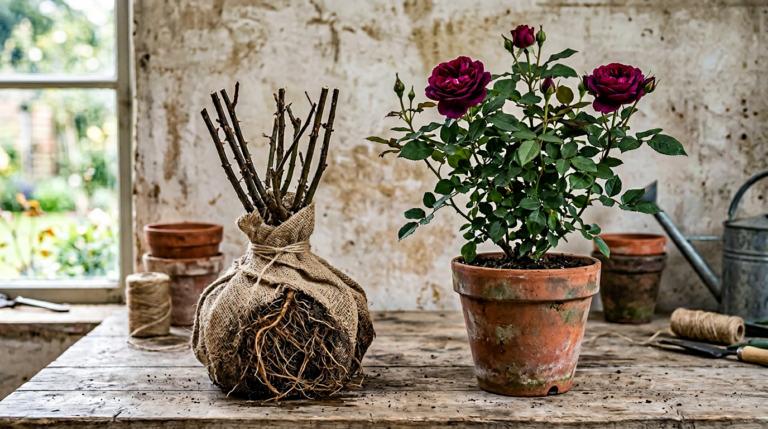
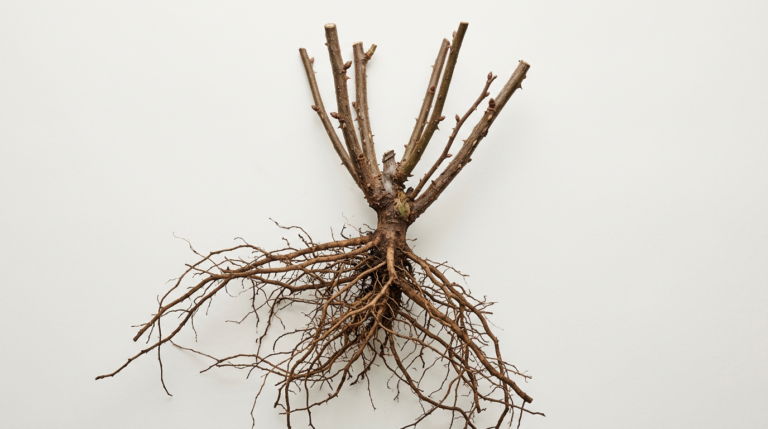
Bare root roses are field-grown. They spend their early life in nursery rows, where they are fertilised, watered, and pruned to build a strong framework. When they become dormant in autumn and winter—when leaves have dropped and the plant has stopped active growth—they are lifted from the ground. The soil is shaken or washed from the roots, and the plants are graded, stored in cool, moist conditions, and then sent to gardeners or retailers. When you receive a bare root rose, you get the dormant plant only: no pot, no compost, and usually no leaves. What you see is the root system and the stems (canes), often with a small amount of moisture-retaining material around the roots to keep them from drying out in transit.
This method of supply has been the standard in the rose trade for generations. It allows nurseries to move large numbers of plants efficiently, and it allows roots to be inspected and trimmed if needed. Crucially, it also means the plant has never been confined by a container. Its roots have grown in soil, in contact with the real conditions of the field, and have not had to adapt to the limits of a pot.
How Potted Roses Differ
Potted roses, by contrast, are grown in containers. They may have been field-grown and then potted for sale, or they may have been raised in pots from the start. Either way, by the time you buy them they have spent a significant period in a restricted volume of compost. The roots fill that space, and in many cases they begin to circle the inside of the pot. When the plant is later planted in the garden, those roots must break out of that pattern and grow into the surrounding soil. Until they do, the plant is effectively still relying on the root ball it had in the pot. That can slow establishment and, in some cases, lead to long-term problems such as girdling roots if the circling habit is not corrected at planting.
Potted roses are convenient: they can be sold in leaf and in flower, and they can be planted at almost any time of year when the ground is workable. But that convenience comes with a trade-off. The plant’s root system has already been shaped by the container, and the gardener has to work with—or around—that when planting.
Why Bare Root Roses Establish More Effectively
The main advantages of bare root roses come down to root behaviour, planting timing, and the way the plant allocates energy once it is in the ground.
Roots Grow Outward, Not in Circles
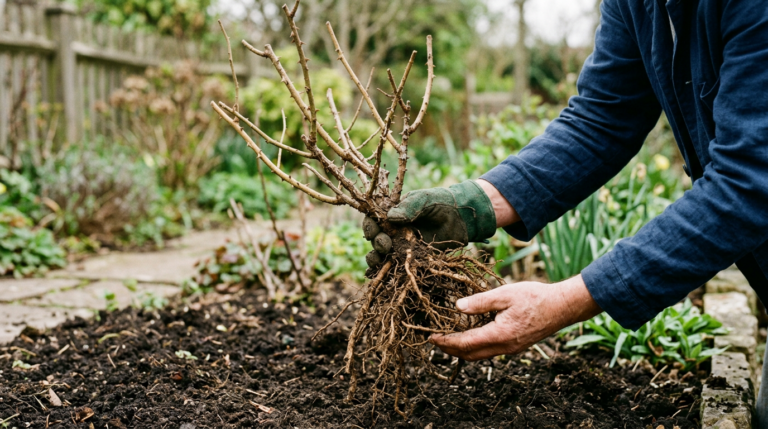
When you plant a bare root rose, the roots are spread out in the planting hole. There is no existing root ball to constrain them. From day one, they grow outward into the native soil, seeking water and nutrients. That encourages a broad, natural root system rather than a dense, pot-shaped one. Research on trees and shrubs has repeatedly shown that circling or kinked roots in container-grown plants can persist for years and sometimes lead to poor anchorage, restricted water uptake, or even premature decline. With bare root roses, you avoid that from the start. The roots you put in the hole are the same roots that will go on to colonise the soil; there is no “transition” from pot to ground.
The Plant Invests in Your Soil
A bare root rose has no store of compost to fall back on. Once it is in the ground, it must draw all its moisture and nutrients from the soil around it. That might sound like a disadvantage, but in practice it pushes the plant to root quickly and thoroughly. The roots grow into the planting hole and beyond, establishing a wide feeding zone. By the time the rose breaks dormancy and puts on new growth, it already has a root system that is integrated with your garden soil. A pot-grown rose, by contrast, may keep most of its roots in the old root ball for a season or more, especially if the root ball is not teased out or slashed at planting. Until those roots venture out, the plant is more vulnerable to drought and less efficient at using the space you have given it.
No Transplant Shock from Pot to Ground
Potted roses are often sold in active growth. Moving them from a controlled nursery environment into the garden can cause stress: different light, different water regime, and a sudden change from compost to soil. Bare root roses are planted when they are dormant. They are not trying to support leaves or flowers at the same time as they are re-establishing roots. When spring comes, they break dormancy in place, with their roots already in the final position. That “wake up” happens in your garden, not in a pot, so the plant’s first flush of growth is already supported by roots that are growing in the right place.
Dormancy and Timing Work in Your Favour
Bare root roses are supplied in the dormant season—roughly from late autumn to early spring in the UK. That timing aligns with the best period for planting roses. The soil is usually moist and workable, and the plant has the whole of the coming growing season to put down roots and produce new growth before it has to face another winter. Planting in winter or early spring gives the rose a long, uninterrupted run to establish. Potted roses can be planted in spring or summer, but summer planting puts more stress on the plant because it has to support foliage and possibly flowers while also growing new roots in hot, sometimes dry conditions. So bare root roses not only have a structural advantage (no pot-shaped root system) but also a seasonal one: they are planted when conditions are most favourable for establishment.
What Research and Experience Tell Us
The benefits of bare root planting are supported both by horticultural research and by the accumulated experience of rose growers and nurseries.
Studies on Root Development
Work on trees and shrubs has shown that root architecture at planting has long-lasting effects. Container-grown plants that are planted without correcting circling roots often retain a restricted root system. Techniques such as root washing, teasing, or making vertical cuts in the root ball can help, but they add to the gardener’s workload and are not always done. Bare root plants start with a clean slate: the roots are visible, can be trimmed if damaged, and are placed in the hole in a natural spread. Similar principles apply to roses. A well-planted bare root rose has no legacy of pot confinement to overcome.
Nursery and Gardener Experience
Commercial rose growers and experienced gardeners have observed for decades that bare root roses, when planted in the right conditions, often “take off” faster than equivalent pot-grown plants after the first season. The first year may see less top growth as the plant invests in roots, but by the second and third year the difference can be striking. We hear regularly from customers who have compared bare root and pot-grown roses in the same garden and found that the bare root plants develop into stronger, more floriferous bushes. That is not to say that pot-grown roses cannot do well—they can, especially if planted carefully and watered through the first year—but the bar for success is often lower with bare root because the plant is not fighting against a pot-shaped root system.
What to Expect in Year One, Two, and Three
In the first year after planting, a bare root rose will typically produce moderate top growth while building its root system. You may see fewer flowers than from an established plant, and that is normal. The plant is investing below ground. By the second year, growth and flowering should step up noticeably as the root system is now able to support more stems and more blooms. By the third year, a well-sited bare root rose should be fully established and performing at its best—and often ahead of a pot-grown rose planted at the same time. Patience in the first season is rewarded in the years that follow.
When to Plant Bare Root Roses
Getting the timing right ensures your bare root roses have the best chance to establish.
The Ideal Planting Window
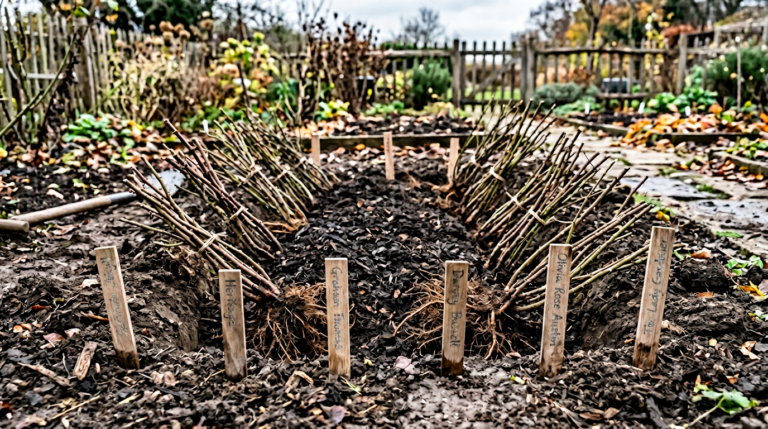
In the UK, the bare root season typically runs from November to March, depending on the weather and the nursery. The ideal window is when the rose is fully dormant and the ground is not frozen or waterlogged. Late autumn planting allows the roots to make some growth before winter; late winter or early spring planting means the plant goes straight into the growing season. Both can work. Avoid planting when the soil is frozen, when it is saturated after heavy rain, or when a hard frost is imminent. If you receive bare root roses and conditions are not suitable, you can heel them in temporarily in a trench or in a large pot of compost in a sheltered spot until the weather improves.
Why Autumn and Winter Beat Summer
Roses planted in autumn or winter put their energy into roots first. When spring arrives, they have already begun to explore the soil, so the first leaves and flowers are well supported. Summer planting of bare root roses is possible in theory but rarely offered, because the plants are not dormant then and would be under much greater stress. If you want to plant in the growing season, pot-grown roses are the practical option—but for the best establishment, choosing bare root and planting in the dormant season is the gold standard.
How to Give Bare Root Roses the Best Start
Planting technique matters as much as timing. Here is how we recommend handling bare root roses from arrival to aftercare.
On Arrival: Unpack and Check
When your bare root roses arrive, unpack them promptly. Check that the roots are moist (they are often packed in damp wood shavings or similar). If they seem dry, soak the roots in a bucket of water for an hour or two before planting. Do not leave the roots exposed to sun or wind for long, as they can dry out quickly. If you cannot plant immediately, keep the plants in a cool, frost-free place and ensure the roots stay moist—either by heeling them in or by wrapping them in damp sacking or similar.
Preparing the Planting Hole
Dig a hole that is wide enough to spread the roots out without cramping them, and deep enough so that the graft union (the knobbly join between the roots and the stems) sits just below the soil surface—about an inch below is a good guide for most soils. In heavy clay, slightly shallower planting can help with drainage; in very light soil, a little deeper can help with stability. Break up the bottom and sides of the hole so the roots can penetrate easily. Avoid adding large amounts of organic matter only in the hole; it can create a “sump” that holds water and discourages roots from leaving the planting pit. Instead, mix a modest amount of well-rotted compost or manure with the soil you use to backfill, and consider improving the whole bed if your soil is poor.
Spreading the Roots and Backfilling
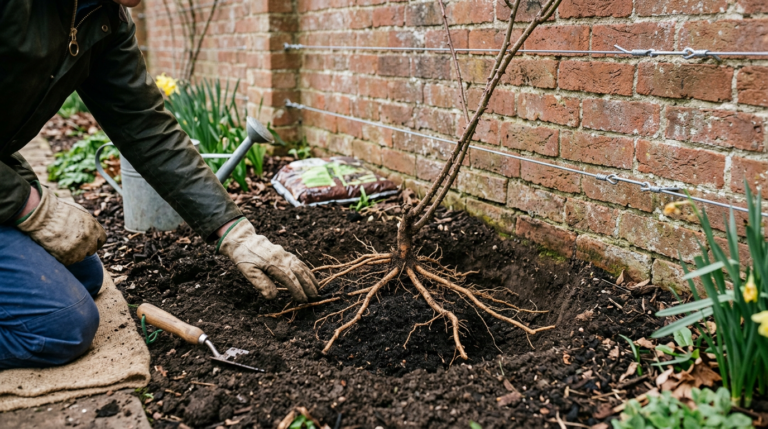
Place the rose in the hole and spread the roots out evenly. Do not coil or bunch them. Hold the plant at the right depth and start to backfill with the improved soil, firming gently as you go so there are no large air pockets. Once the hole is full, firm the surface again and water in thoroughly. A shallow basin around the plant can help direct water to the roots in the first season. There is no need to prune the stems hard at planting unless they are damaged; a light trim to remove any broken tips is enough. The main pruning can follow in spring according to the type of rose.
Aftercare: Water and Mulch
For the first growing season, keep the rose well watered during dry spells. A thick mulch of garden compost, chipped bark, or similar will conserve moisture and suppress weeds. Avoid piling mulch right against the stems. With consistent moisture and no competition from weeds, your bare root rose should put on strong growth and establish a solid root system by the end of the first year.
Common Myths About Bare Root Roses
A few misconceptions can put people off bare root roses. Here we set the record straight.
“Bare Root Roses Are Harder to Grow”
They are not inherently harder; they just require planting at the right time and with care. If you follow the steps above—moist roots, a well-prepared hole, correct depth, and good aftercare—bare root roses are straightforward. Many gardeners find them easier than pot-grown roses because there is no root ball to worry about and no circling roots to correct.
“You Have to Plant Them Immediately”
You do need to plant them in the dormant season, but you do not have to put them in the ground the same day they arrive. If the weather is bad, heel them in or keep the roots moist in a cool place until conditions improve. A few days or even a couple of weeks in temporary storage will not harm them as long as the roots do not dry out or freeze.
“Bare Root Roses Are Only for Experts”
Bare root roses are used by beginners and experts alike. The key is to follow clear instructions and to plant when the plant and the soil are ready. Many nurseries, including Harkness, provide planting guides with every order so that even first-time rose growers can succeed.
“Potted Roses Are Always More Convenient”
Potted roses can be planted in spring and summer, which fits around a busy schedule. But that convenience often means planting when the plant is in active growth and when the weather is warmer and drier—conditions that add stress. Bare root roses require a trip to the garden in the dormant season, but the payoff is a plant that settles in with less effort and often outperforms a pot-grown equivalent in the long run. For many gardeners, the slight extra planning is worth it.
Soil Preparation: Getting the Ground Right
The quality of your soil has a big influence on how quickly bare root roses establish. Time spent on preparation pays dividends.
Testing and Improving Your Soil
If you are unsure about your soil, a simple pH test can help. Roses generally prefer a pH between 6 and 7—slightly acid to neutral. Very acidic soils can be improved with garden lime; very alkaline soils may need sulphur or plenty of organic matter. Heavy clay soils benefit from the addition of well-rotted compost or manure to improve structure and drainage. Light, sandy soils also benefit from organic matter, which helps retain moisture and nutrients. Avoid planting in waterlogged or compacted ground; improve drainage or consider raised beds if necessary.
Feeding at Planting and in the First Year
Opinions vary on whether to add fertiliser at planting. A modest amount of a balanced or rose fertiliser mixed into the backfill can give the plant a gentle start, but too much can encourage soft growth or even root damage. We prefer to focus on good soil structure and then feed once the rose is actively growing—typically from spring onwards—with a dedicated rose feed applied according to the product instructions. In the first year, the priority is even moisture and root development; feeding supports that rather than forcing excessive top growth.
Choosing the Right Varieties
Whether you choose bare root or pot-grown, selecting the right rose for your site is important. Consider aspect, soil type, and the space you have. Climbers need support; shrub roses need room to spread; patio roses suit containers. At Harkness we offer a wide range of bare root roses, from classic hybrid teas and floribundas to climbers, shrubs, and ground-cover types. If you are new to bare root, start with a variety that is known for vigour and disease resistance—our team can advise on the best options for your garden.
Hybrid Teas and Floribundas
These are the classic “bedding” roses—repeat-flowering, with a range of colours and forms. They are well suited to bare root planting and will establish quickly in a sunny, open position. Choose varieties that suit your colour scheme and the size of your border; some are more compact, others make larger bushes.
Shrub and Climbing Roses
Shrub roses tend to be more relaxed in habit and often have excellent disease resistance. Many are repeat-flowering and work well in mixed borders. Climbing roses need a wall, fence, or pergola; plant them so the roots are away from the base of the support to ensure they get enough water. Both types are commonly supplied as bare root and respond well to correct planting and aftercare.
Patio and Ground-Cover Roses
Smaller roses for containers or the front of a border are also available as bare root. They can be planted in the same way as larger roses; just ensure the hole is proportionate and that container-grown specimens have adequate drainage and a large enough pot if you are growing them in a pot permanently.
Frequently Asked Questions About Bare Root Roses
Can I plant bare root roses in spring if I missed the autumn window?
Yes. Late winter and early spring are still within the normal bare root season. As long as the rose is still dormant and the ground is workable, spring planting is fine. The plant will have slightly less time to root before breaking dormancy than an autumn-planted rose, but with good aftercare it will still establish well. Avoid planting once the rose has already started into growth; at that point pot-grown stock is a better option.
Do I need to prune bare root roses when I plant them?
Light pruning at planting is enough: remove any damaged or broken stems and trim very long roots that would not fit comfortably in the hole. Heavy pruning of the stems is usually done in late winter or early spring, according to the type of rose, once the plant is in the ground. Some gardeners prefer to shorten the stems at planting to reduce wind rock and balance top growth with root loss; that is optional and depends on your conditions and the size of the plant.
How do I store bare root roses if I cannot plant straight away?
Keep the roots moist and the plant cool and out of direct sun. Heeling in—placing the roots in a shallow trench and covering them with soil or compost—is ideal for a delay of several days or weeks. Alternatively, pot the rose temporarily in a large container of moist compost and keep it in a cold, frost-free place. Do not let the roots dry out or freeze solid.
Are bare root roses cheaper than pot-grown?
Often yes, because the nursery does not have to pay for pots, compost, or long-term watering and feeding in containers. Bare root roses are also easier to ship in bulk. The price difference varies by variety and supplier, but many gardeners find that bare root offers better value, especially when buying several roses at once.
Long-Term Care: After the First Year
Once a bare root rose has come through its first season, it should be well anchored and ready to behave like any other established rose. Continue to water during dry spells in the second year if needed, and apply a mulch each spring. Prune according to type—hybrid teas and floribundas in late winter or early spring, climbers after flowering or in winter depending on the variety. Feed with a rose fertiliser in spring and again after the first flush of flowers if you use a repeat-feeding regime. With minimal ongoing care, a well-planted bare root rose will reward you for many years.
Summary: Why Bare Root Wins on Establishment
Bare root roses establish better than pot-grown ones because they have no pot-shaped root system to overcome, they are planted when dormant so they can focus on root growth, and they are supplied in the season when planting conditions are best. With a wide planting hole, the roots spread out naturally and grow into your soil from the start. Good preparation and aftercare—moist roots on arrival, correct depth, and consistent watering in the first year—give you the best chance of a strong, long-lived plant. For gardeners who want to maximise the performance of their roses, choosing bare root and planting in autumn or winter remains one of the most reliable strategies. We have seen it work in our own trials and in the gardens of countless customers over more than a century, and we recommend it with confidence for anyone ready to plant roses the way nature and good horticulture intend.