Timing Does Not Always Align
Mail-order bare root roses usually arrive in peak planting season—late autumn through early spring—but life intervenes: frozen ground, waterlogged clay, builders on site, or bad weather. Dormant plants are resilient if roots stay cool, moist, and aerobic; they fail fast if they dry, cook in sun, or sit anaerobic in sealed plastic. At Harkness Roses we pack for short transit; your job is prompt unpacking and a holding strategy until the hole is ready. This guide covers heeling-in, temporary pots, fridge pitfalls, and what “too long” looks like—grounded in decades of UK nursery practice.
On Arrival: The First Thirty Minutes
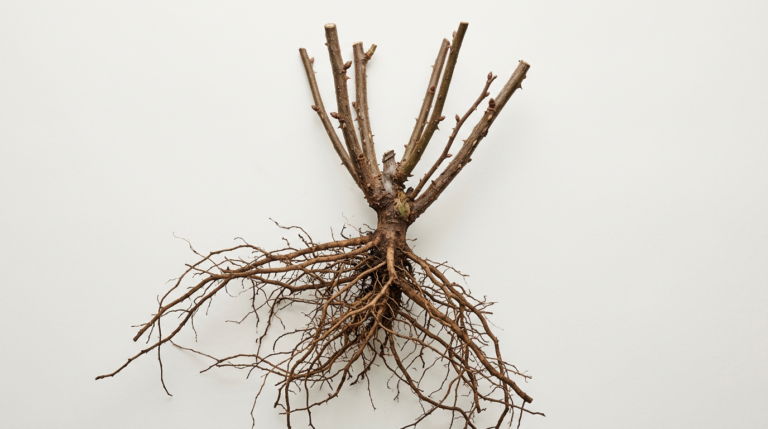
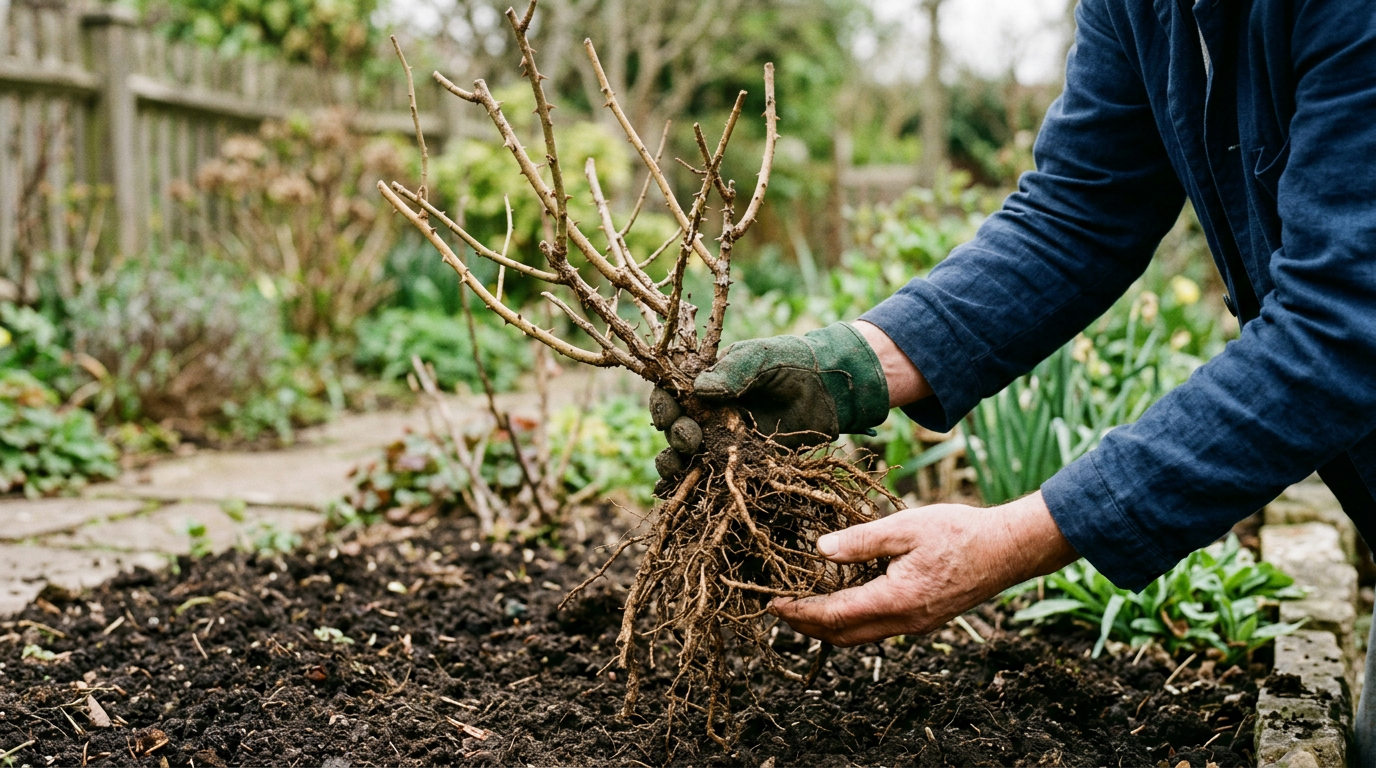
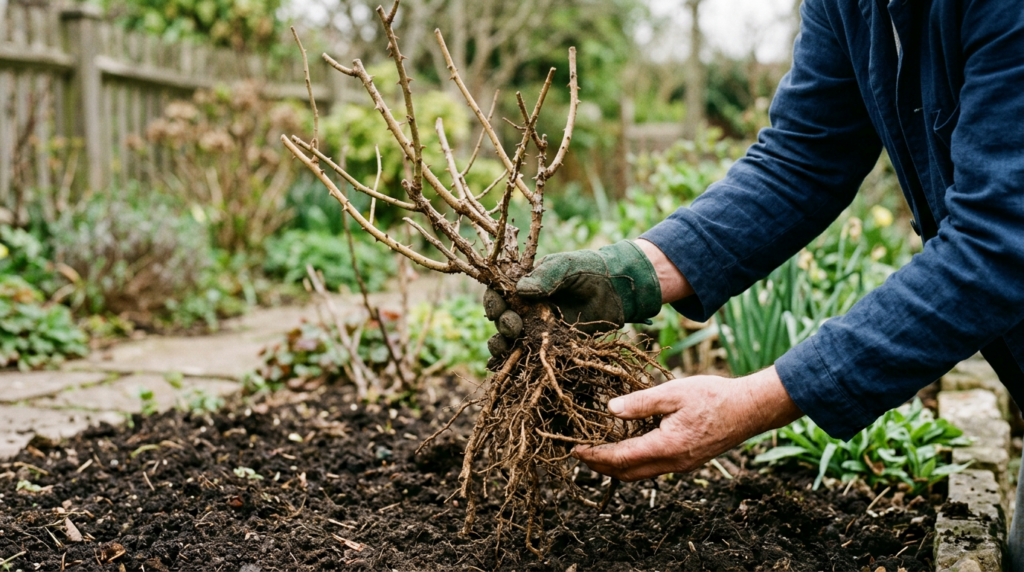
Open the package the day it arrives unless courier instructions say otherwise. Inspect: broken stems, snapped roots, desiccation (wrinkled, lightweight roots), or mould from heat buildup. Soak roots in rainwater or tap left to stand for one to two hours if they feel at all dry—fully hydrated roots tolerate short delays better. Keep graft union clean; do not scrub bark. If planting is same day, skip prolonged soaking and plant following your normal bare root method (see our main bare root establishment article).
Heeling-In: The Traditional Nursery Method
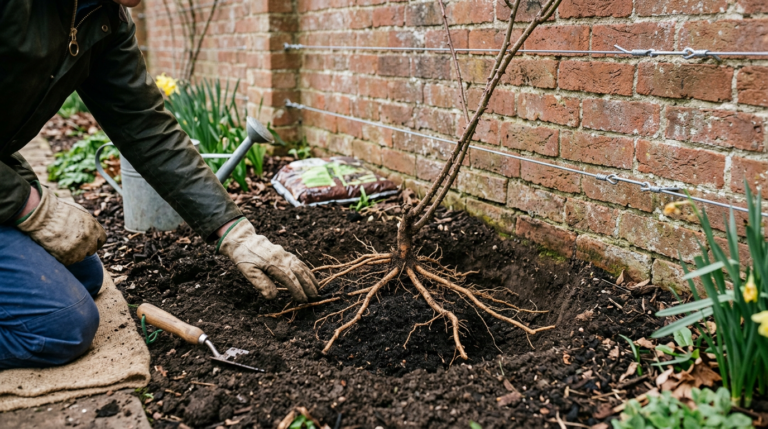
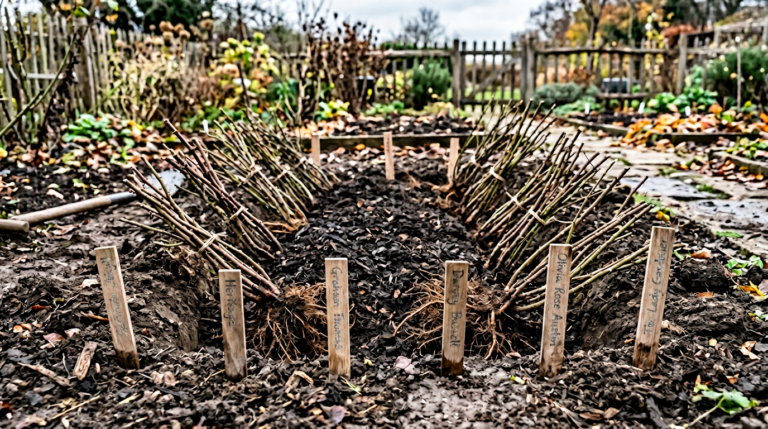
Heeling-in means laying plants temporarily in a shallow trench outdoors at an angle, roots covered with moist soil, stems exposed. Choose shade or semi-shade, free-draining ground—not a frost pocket that alternates freeze–thaw on exposed crowns. Dig a trench deep enough to cover roots completely; firm soil lightly; water if dry. Label each variety—twelve anonymous sticks become chaos by February. Rabbits love young rose bark—mesh if needed.
Heeling-in suits days to several weeks in typical UK winters; it is not indefinite storage. Check after windy spells—soil can dry on the surface while roots remain wet below.
Holding in Compost or Bark in a Shed
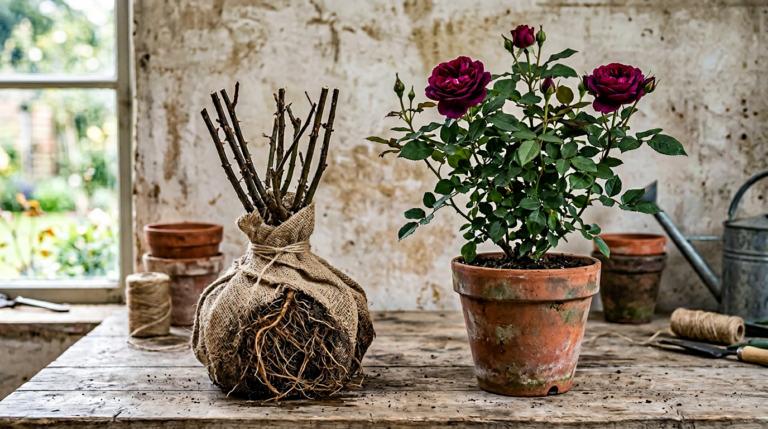
If trenching is impossible, place roots in a large container of moist (not sodden) compost, coir, or shredded bark in a cold outbuilding—frost-free is not required for fully dormant stock; extreme freeze in thin compost can damage fine roots. Airflow matters: do not seal plants in airtight bags with wet roots—anaerobic conditions cause black, foul-smelling roots. Check weekly; spritz if drying. Mice may nest—inspect.
Temporary Pots: When and How
Potting bare root roses into 15–20 litre pots with multipurpose compost buys flexibility if spring arrives and ground work slips—but you create summer watering duty. Use pots only when you can commit to not letting them dry. Pot-bound roses by June undo establishment benefits; plan plant-out before strong root circling. If potting, spread roots; do not coil; trim only damaged tips.
What Not to Do
- Do not leave roots wrapped in plastic in a warm porch—condensation + warmth = rot.
- Do not stand roots in water for days—hypoxia kills fine root hairs.
- Do not rely on a domestic fridge long-term—ethylene from fruit and drying cold air cause variable damage; short cool holding in a proper cold store differs from a kitchen appliance.
- Do not fertilise dormant held stock—wait until planted and actively growing.
Frost, Snow, and Waterlogged Soil
Frozen ground prevents planting—heel-in or hold until thaw. Snow insulates; ice on roots in a trench is less ideal than snow-covered soil—avoid standing water in the trench. Waterlogged garden soil is unsuitable for immediate planting even if plants are ready—improve drainage or wait; planting into soup suffocates roots.
How Long Is Too Long?
There is no single calendar day—health at arrival, temperature, and moisture decide. Vigorous stock held cool and moist often tolerates many weeks; weak or dry-shipped stock may fail sooner. If buds swell while still held, plant as soon as soil allows—elongating shoots in dark sheds become etiolated and fragile.
Related Reading
Once your plants are in the ground, you will want planting depth, mulching, and first-year feeding clear in your mind—see our guides on why bare root establishes well and summer watering. Straight talk about what can go wrong (dry roots, warm porches, sealed plastic) saves more roses than vague advice to “keep moist.”
Frequently Asked Questions
Can I leave bare root roses in the delivery box? Very briefly in a cool place—unpacked is safer.
Should I prune before heeling-in? Only damaged wood; major shaping waits until proper prune window by type.
Heeling-in on heavy clay? Risky if trench holds water—use raised heel-in or container of free-draining mix.
Can I plant in frozen weather if I pre-dig? Generally no—ice in hole damages root–soil contact.
Conclusion
Bare root storage is about moisture, temperature, and oxygen. Heel-in or cold, moist holding beats warm, wrapped neglect every time. Get plants into final soil as soon as conditions allow—your roses will wake in place, ready for a strong first summer.